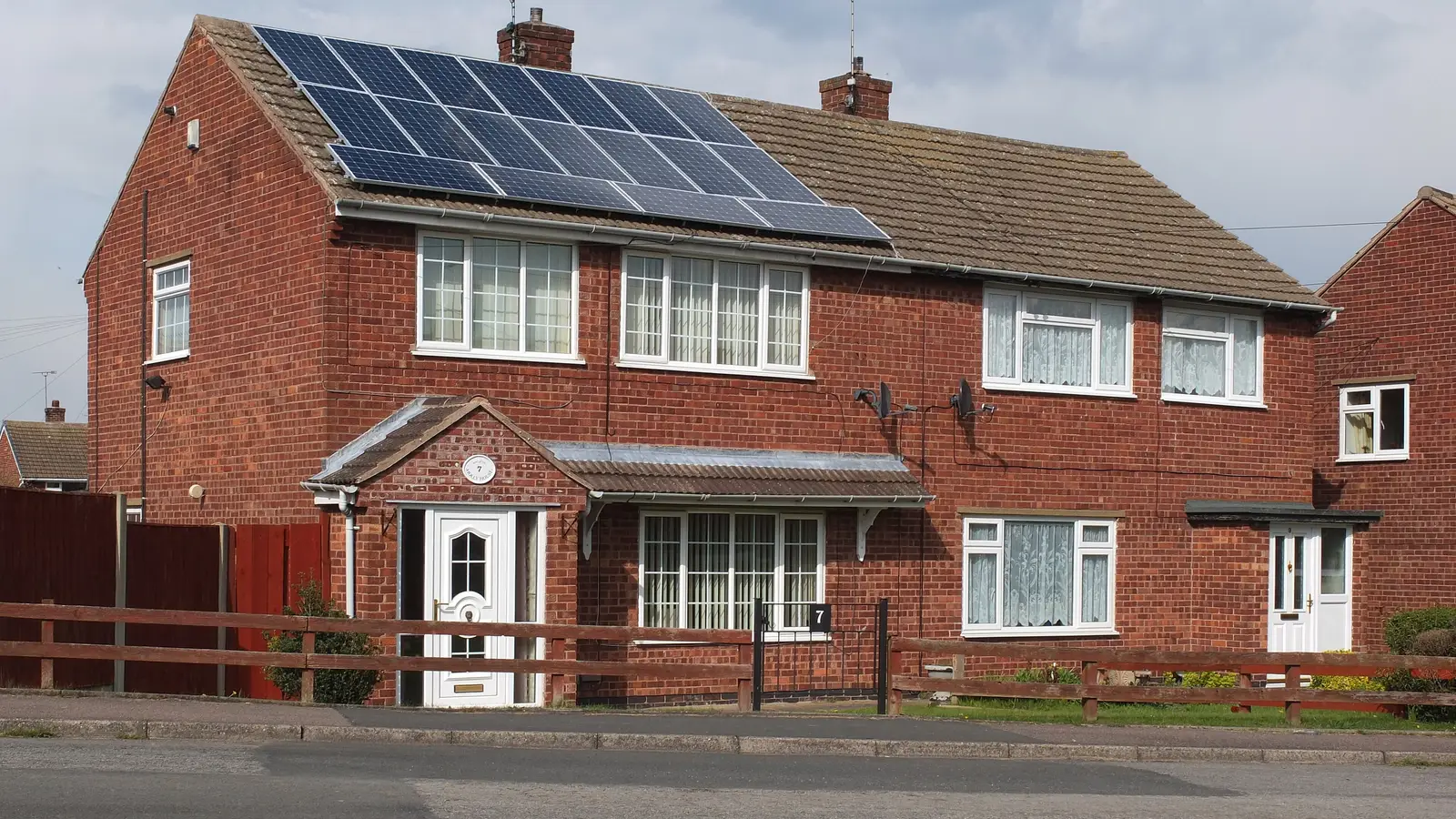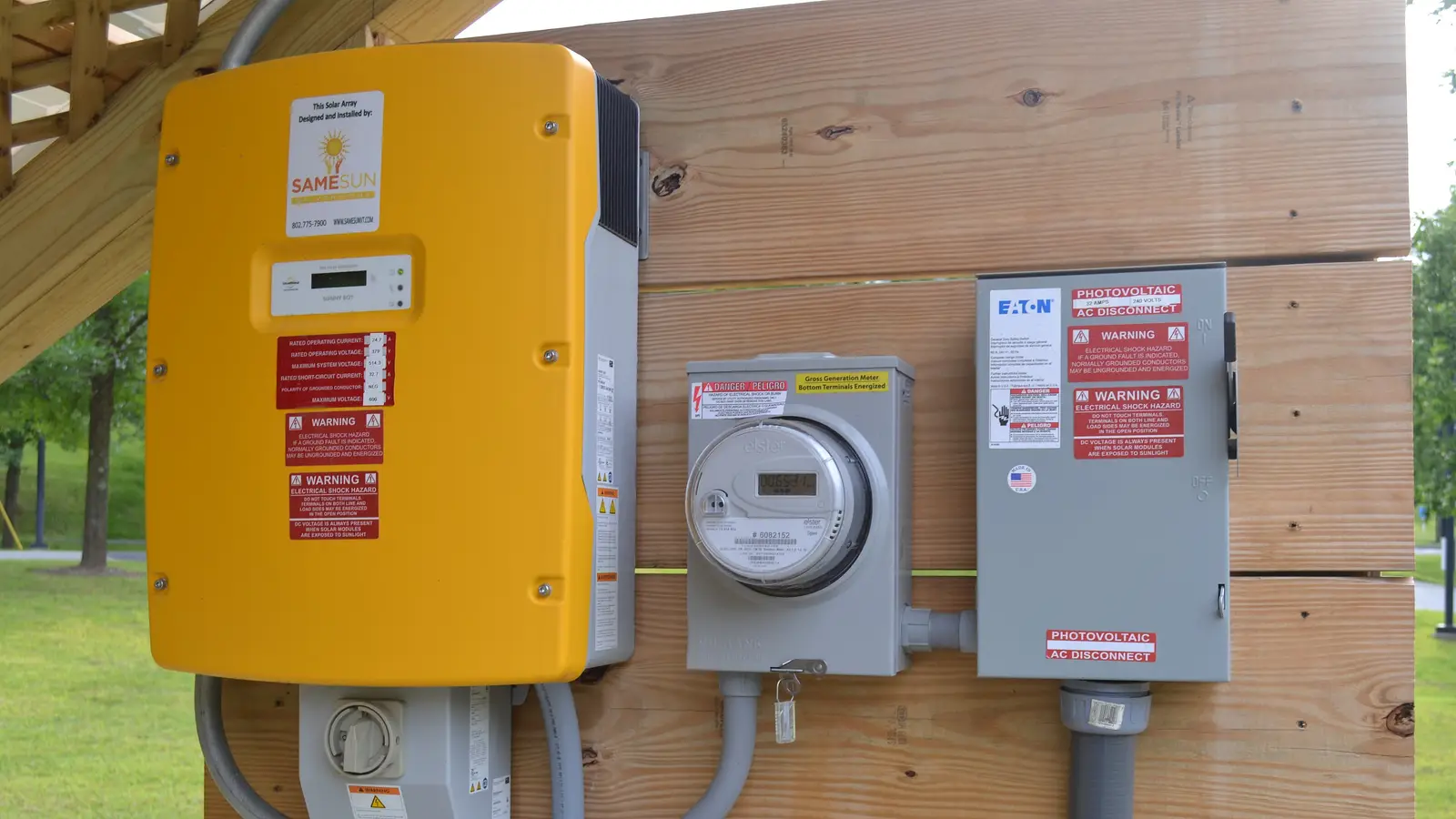

Solar panels generate most strongly in the middle of the day, yet many households use the bulk of their electricity once everyone is home. A home battery installation closes that gap by holding surplus generation until you need it. If you would like a recommendation for your property, send your details through the quote form at the top of this page.
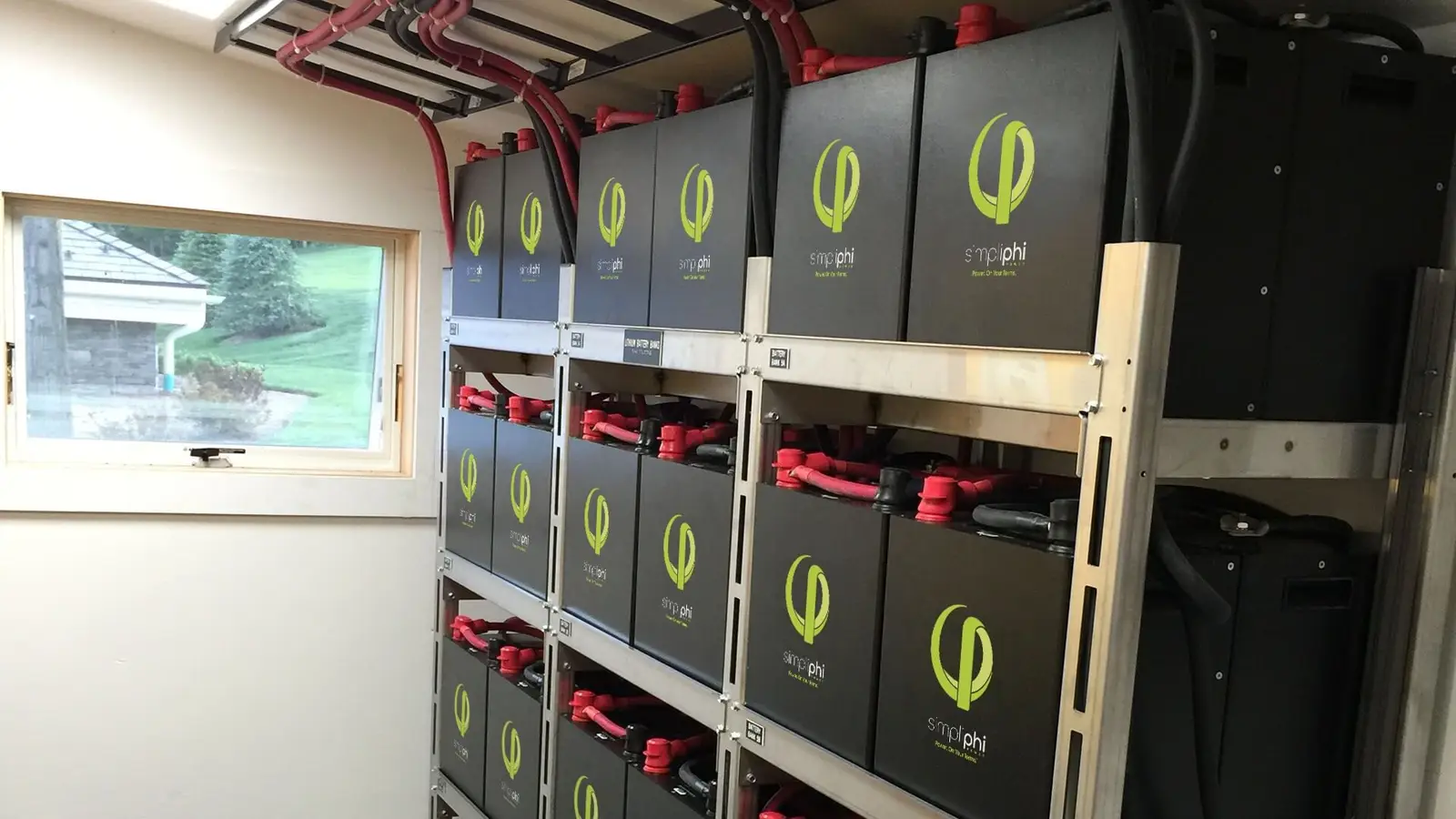
Battery Installation for New and Existing Solar Systems
Batteries with a new solar installation
Planning panels and storage together lets us choose an inverter arrangement that suits both from the outset, often a hybrid inverter that manages generation and storage in one unit. It also keeps everything to one survey and one handover. If you are still deciding on panels, our domestic solar panels page explains how the array itself is designed.
Battery retrofit to existing panels
If your panels are already on the roof, a battery retrofit can make better use of what they produce. Solar Newcastle adds storage to systems fitted by other companies as well as our own, after checking the existing inverter, wiring and metering. Depending on the setup, the battery may be AC-coupled alongside your current inverter, or a replacement hybrid inverter may be the better route.
What a Home Battery Does for You
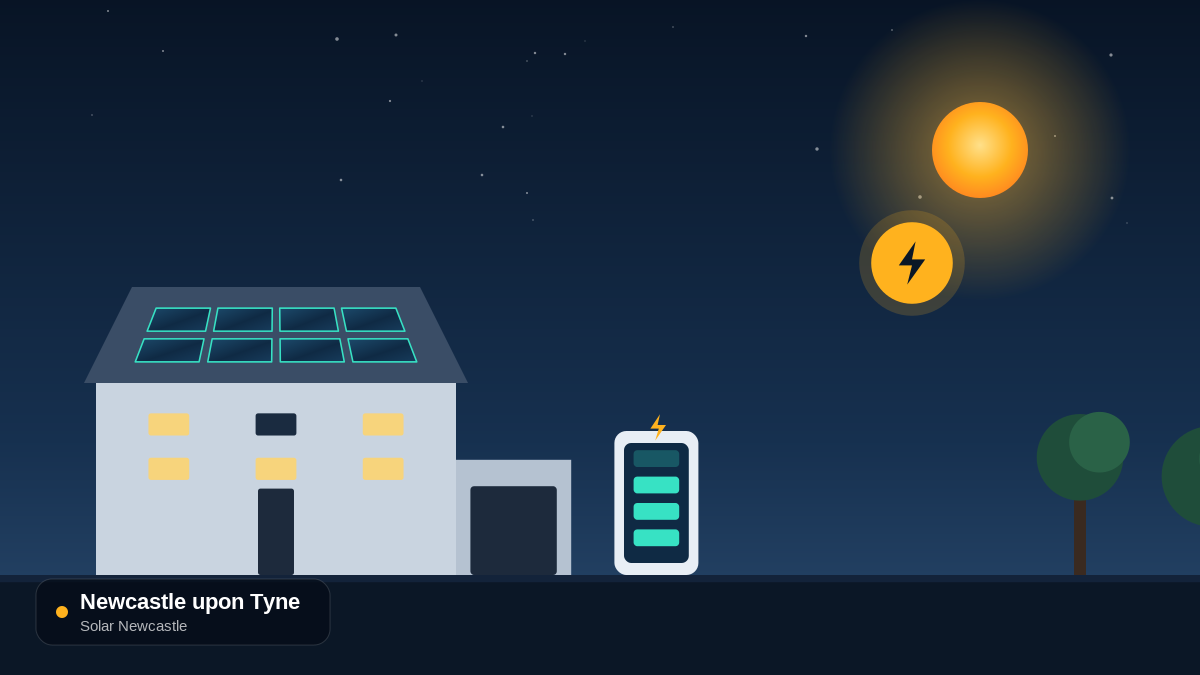
Without storage, any electricity your panels produce beyond what the house is using at that moment is exported. With a battery, part of that surplus is kept and released later to run lighting, cooking, appliances and entertainment in the evening. Self-consumption goes up: more of your own solar generation is used at home, and less is sold at export rates. The grid still supplies anything the panels and battery cannot cover, so the house never runs short.
Sizing Solar Battery Storage to Your Evening Use
A bigger battery is not automatically a better one. What matters is how much electricity you typically use between late afternoon and the next morning, and how much surplus your panels produce to fill it. Solar Newcastle looks at your bills, smart meter data if available and your household routine, then compares that with the expected generation from your array across the seasons.
Your quote explains two figures. Usable capacity, measured in kilowatt-hours, is the energy the battery can deliver in practice, which can be lower than the headline number. Power rating, measured in kilowatts, is how quickly it can deliver that energy, and it affects whether the battery can support several appliances at once. Getting both right is the difference between a battery that earns its place and one that sits half-used.
Making the Most of Time-of-Use Tariffs
Some electricity suppliers offer tariffs with cheaper rates at certain hours, often overnight. A compatible battery can be set to charge during those periods and discharge when rates are higher, as well as storing solar surplus during the day. That can help most in winter, when generation is lower. Tariff terms change and vary between suppliers, so we explain how the battery would be configured and leave the choice of tariff with you. At handover, we show you the settings that control charging and discharging.
Compatibility Checks Before We Quote
For a retrofit, Solar Newcastle checks several things before recommending equipment:
- the make, model and age of your existing inverter
- the size of the array and its typical generation
- your consumer unit, meter arrangement and space for new protective devices
- whether the change needs notifying to Northern Powergrid
- your current monitoring and how the battery will be added to it
If an older inverter is nearing the end of its working life, it may make sense to replace it at the same time, and we will explain why if that applies. Residential batteries in Great Britain are also zero-rated for VAT until 31 March 2027, so keep that date in mind when you plan the timing. Our page on how a solar project runs sets out each stage from enquiry to handover, and the solar FAQ page answers common questions about storage.
Battery Siting and Safety
Where a battery goes matters as much as which battery you choose. Common locations include garages, utility rooms and suitable external walls, but we check every position against the manufacturer's installation requirements for clearances, ventilation, temperature and fire safety. We also consider cable routes, access for future maintenance and how the unit will be protected from knocks and the weather. We never put a battery somewhere just because it is out of sight. For business premises, our commercial solar service covers larger storage systems, which have their own siting requirements.
Will a Battery Work in a Power Cut?
Not by default. A standard grid-connected battery shuts down during a power cut for safety reasons, just like the solar system it is connected to. Backup is possible, but it needs equipment and wiring designed for the purpose, usually supplying a selected set of essential circuits. If keeping the fridge, lights or a home office running matters to you, tell us at the start. We will explain what a backup-capable setup would cover and what it would not.
How a Home Battery Installation Works
After your enquiry, Solar Newcastle reviews your electricity use and, for a retrofit, the details of your current system. A survey then confirms the battery location, cable route and electrical connection point. You receive an itemised quote showing usable capacity, power rating, any inverter work and the installation itself. Once you are happy to proceed, we fit, test and commission the battery and set up monitoring so you can see energy flowing between the panels, battery, home and grid.
Battery Installations Across Tyneside
Solar Newcastle fits batteries throughout Newcastle upon Tyne and nearby towns, including North Shields, South Shields and Blyth. The full list is on our areas we serve page. If your existing system has a fault that needs fixing before storage is added, our solar repair service can deal with that first.
Get a Solar Battery Quote
Let us know whether you already have panels and, if so, the inverter make and model and roughly when they were installed. Add your postcode, a recent bill and your main goal, whether that is evening use, cheaper tariffs or backup. Use the quote form at the top of this page, email info@solarnewcastle.co.uk or reach us through the contact page. For an idea of what drives the price, read our guide to solar and battery costs.